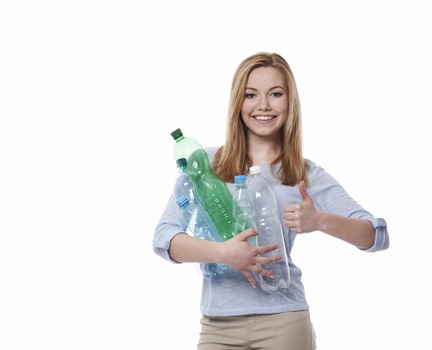
 Ealing House Clearance: Recycling and Sustainability Commitments
Eco-friendly waste disposal area and sustainable rubbish area for the borough
 Our approach to responsible clearing in Ealing
At Ealing House Clearance we prioritise an eco-first approach to every job. As a local specialist in house clearance in Ealing and surrounding west London communities, our sustainable rubbish operations focus on minimising landfill, maximising reuse and ensuring materials are processed at authorised local transfer stations. We align our processes with the Borough's approach to waste separation, encouraging clear separation of dry recyclables, food waste and bulky items at source so more can be diverted into circular streams.
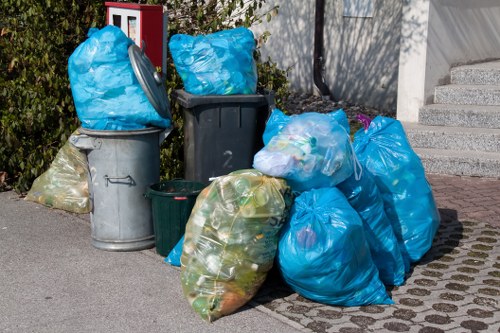 Our sustainable clearance plans include a clear target: we aim for a recycling percentage target of 85% of recovered materials by 2028 across all residential and commercial clearances. This 85% recycling goal covers materials recovered for direct recycling, refurbishment and reuse — not just diversion from landfill. It reflects our ambition for Ealing waste clearance to become a model for low-waste urban services.
To achieve that target we operate a two-stage sorting and recovery process: pre-collection triage on-site, followed by consolidation and delivery to authorised transfer facilities. We work closely with local transfer stations and civic amenity sites, such as Southall Household Recycling Centre and the Greenford transfer site, plus nearby west London transfer facilities that specialise in bulky waste and mixed recyclables. These partnerships allow us to route materials to the best available recycling or reuse outlet quickly, reducing handling time and emissions.
Our charity partnerships form a cornerstone of sustainable reuse. Where items are in reusable condition — furniture, small appliances, books, household textiles and toys — we collaborate with local charities and social enterprises to divert goods from disposal. These partner organisations receive sorted donations for resale, training programmes and community distribution. Strong relationships with charities help house clearance Ealing projects deliver social as well as environmental benefits.
We also prioritise specialist recycling streams for problem materials. Electronic items (WEEE), mattresses, textiles, and household hazardous waste are routed to licensed recyclers or refurbishment centres. Typical recycling activity in the borough includes:
- Dry mixed recycling — paper, card, glass and metals sorted for commodity recovery;
- Food and garden waste — where practical, separated for composting or anaerobic digestion;
- Bulky and WEEE recycling — furniture and electronics repaired or processed at certified facilities;
- Textile reuse — wearable items rehomed, unwearable fabrics recycled.
These streams reflect the local emphasis on source separation and the borough's encouragement of residents to participate in waste sorting — practices we mirror during every clearance.
To reduce our operational carbon footprint we have invested in low-carbon vans and efficient route planning. Our low-emission fleet includes hybrid and electric vehicles used for local pickups and transfer trips. This reduces tailpipe emissions when compared with traditional diesel-only rubbish removal in Ealing. In addition to vehicle choice, we adopt consolidated scheduling to minimise vehicle kilometres and prioritise multi-drop collections that cut fuel consumption.
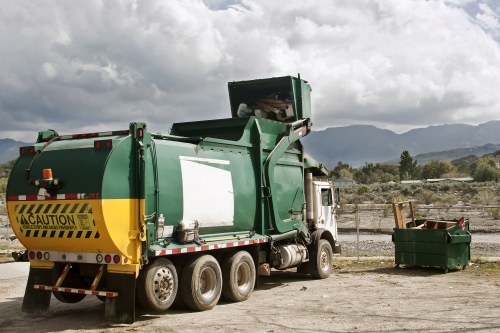 What clients can expect: clear documentation of materials recovered, transparent reporting against our recycling percentage target, and options to prioritise reuse pathways. For larger property clearances we provide itemised diversion reports so clients can see how their clearance contributed to reuse, refurbishment or recycling. We also offer advice on preparing items for donation, making it faster and easier to connect with charity partners.
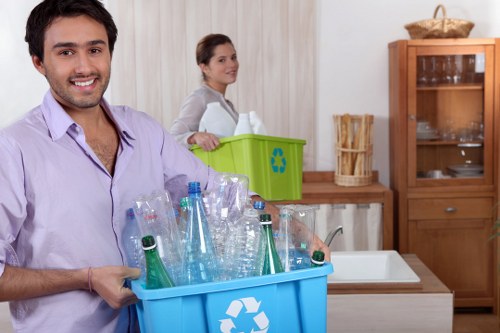 Local transfer station coordination: our logistics team coordinates directly with facility operators to ensure accepted materials are routed correctly — from mattresses and timber to metals and mixed recyclables. Where transfer sites offer specialist processing, like mattress recycling or WEEE refurbishment, we prioritise those routes to keep the resource loop active in west London.
Community involvement is critical. We engage with civic groups, housing associations and local charities to host reuse events and community collection days. By supporting social reuse channels we reduce landfill, generate local jobs through refurbishment and keep goods circulating locally. Our partnerships are built on mutual transparency, with clear pickup schedules, codes of practice for donation handling and shared environmental targets.
Finally, our compliance and auditing practices ensure that materials leaving a clearance are traceable to their end destination. We only work with licensed waste carriers, accredited recycling partners and transfer stations that meet regulatory standards. This accountability supports the Ealing clearance sector's shift towards a more circular, sustainable future, where recycling and sustainable rubbish management are standard practice, not an afterthought.
In summary: whether you need Ealing waste clearance, sustainable house clearance in the borough or eco-conscious rubbish removal, our model blends ambitious targets, local transfer station partnerships, charity reuse networks and low-carbon vans to deliver measurable environmental outcomes. We are committed to continuous improvement and to making house clearance in Ealing both responsible and resource efficient.