Ealing House Clearance Modern Slavery Statement
 Ealing House Clearance affirms a zero-tolerance policy towards modern slavery, forced labour and human trafficking in all areas of our operations. This statement outlines the actions taken by our Ealing house clearance business to identify, prevent and remediate the risk of exploitation across our teams, contractors and supply chains. We are committed to treating these risks with the highest priority and to continual improvement.
Our commitment applies to all employees, subcontractors and suppliers engaged in Ealing clearance services and related activities. All personnel are expected to uphold these standards, and breaches will be treated with the utmost seriousness. The policy forms part of our code of conduct and is integrated in staff induction, training and contractual terms.
 Key commitments include:
- Clear prohibition of forced labour, servitude and human trafficking in every contract and procurement process.
- Regular risk assessments covering operational locations, seasonal pressures and vulnerable roles.
- Supplier due diligence and contractual clauses requiring compliance with anti-slavery standards.
Due Diligence, Supplier Audits and Risk Management
We maintain a structured due diligence process for suppliers used in Ealing home clearance and related services. This process includes pre-engagement checks, risk profiling and ongoing monitoring. High-risk suppliers are subject to enhanced scrutiny, which may include requests for documentation, evidence of labour standards, and site visits where appropriate.
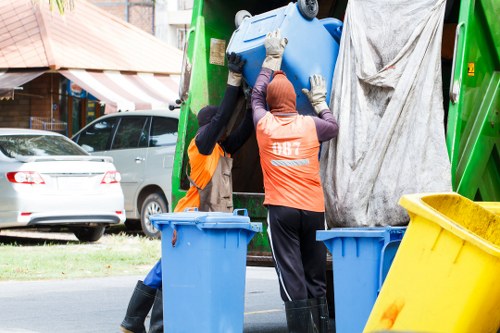 Supplier audits form a core part of our prevention strategy. Audits are conducted periodically and whenever red flags are raised. These audits assess payroll practices, working hours, recruitment fees, worker documentation and the use of intermediaries. Findings are recorded, and corrective actions are tracked until closure.
Where non-compliance is detected we require prompt remediation. Persistent or severe breaches may result in suspension or termination of contracts. Our procurement teams in the Ealing clearance operation are trained to escalate instances of suspected exploitation and to work with suppliers to remediate issues quickly and effectively.
Reporting Channels, Training and Worker Support
We provide multiple confidential reporting channels to allow concerns about modern slavery to be raised safely. Employees and third parties can report suspected wrongdoing through anonymous internal reporting mechanisms and by speaking directly with management or compliance personnel. Reports are treated confidentially and investigated impartially.
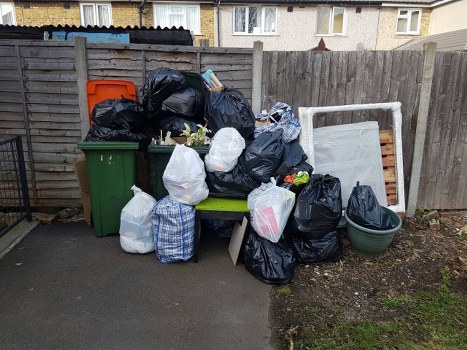 Training forms a fundamental pillar of our approach: staff in Ealing clearance services receive regular training on recognising signs of exploitation, safe recruitment practices and correct escalation routes. Contractors are informed of our expectations prior to engagement and reminded of them periodically.
 We aim to support any individuals identified as victims of exploitation. Where appropriate, we will collaborate with relevant authorities, support agencies, and legal advisers to ensure that the affected persons receive protection, safe accommodation and access to local support services while prioritising their safety and wellbeing.
Governance and accountability for this Modern Slavery Statement rests with senior leadership. Responsibilities include ensuring that policies are implemented effectively and that adequate resources are allocated to anti-slavery measures within our Ealing house clearance operations. Regular reporting to senior management ensures transparency and continuous oversight.
We will continue to improve our supplier engagement, expand audit coverage and refine our risk assessment methodologies. Our measures will be kept under constant review to respond to emerging risks and industry best practice.
We undertake an annual review of this statement, our policies and the effectiveness of our actions across the Ealing clearance services we provide. The review includes analysis of audit outcomes, incident reports, training completion rates and stakeholder feedback. Results of the annual review inform updates to our procedures and training programmes to ensure that our anti-slavery approach remains robust and responsive.